
Fences & gates in Seattle.
Our home base: custom western red cedar fences, arbors, and automated gates built for Seattle's hills, glacial-till clay, and SDCI rules, block by block.
Seattle is home. Our shop sits in NE Seattle, off Lake City Way in 98125, and we've spent years learning how this ground behaves from one neighborhood to the next. The city is a patchwork of hills and benches, so a fence line that runs flat in Greenwood can fall a foot between posts in Mount Baker, and the glacial-till clay under most of it holds winter water and heaves anything set too shallow. Add a mature conifer canopy that throws roots and wind load, and you've got conditions that punish a fence built in a weekend. We build the other kind: posts 24 inches deep in concrete on a gravel base, below the frost line, hot-dip galvanized hardware, cedar finished like furniture.
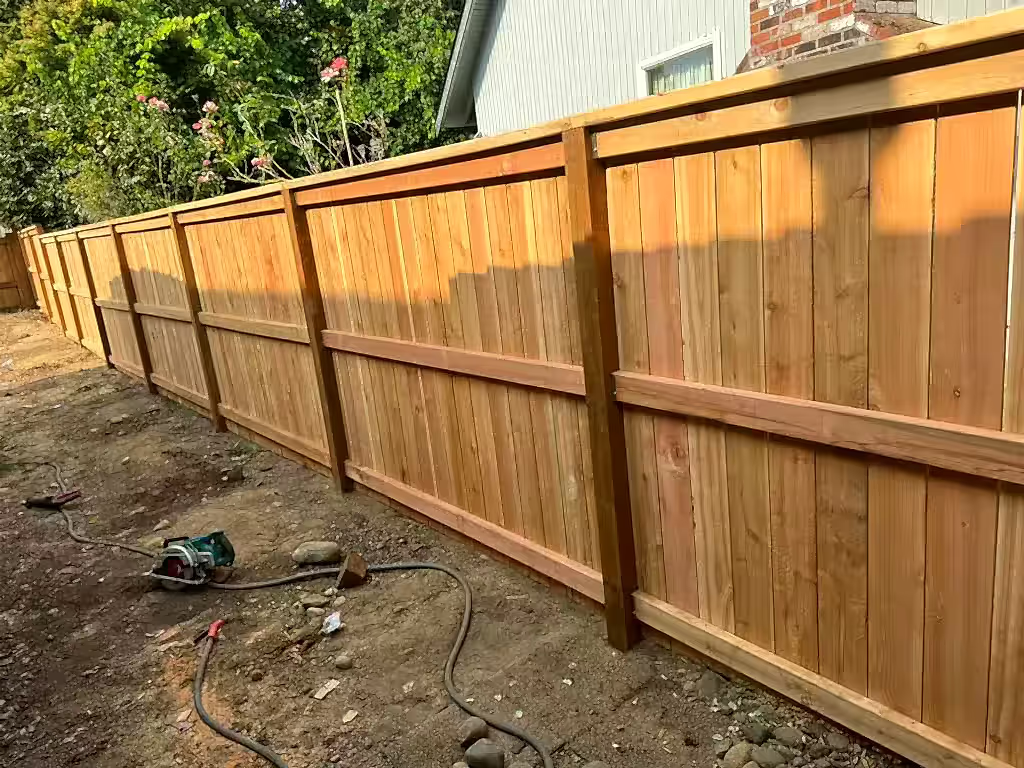
- Board-on-board western red cedar privacy (6 ft side and rear)
- Horizontal cedar slat for modern infill and box homes
- Stepped or racked panels for Seattle's sloped lots
- Hand-built arched cedar arbor over the gate (the +2 ft allowance reaches 8 ft without a permit)
What we watch for in Seattle.
SDCI height and setbacks
Seattle SDCI caps fences at 6 ft on the side and rear and 4 ft in the front-yard setback, with up to 8 ft allowed on a slope when average post height stays 6 ft. An arbor or trellis adds 2 ft to an 8 ft no-permit ceiling, and a fence atop a retaining wall stays under the combined 9 ft 6 in cap.
Glacial-till clay heaves
The dense, water-holding till under most Seattle lots shifts through freeze-thaw and topples shallow-set posts, which is why so many city fences lean by the third winter. We dig 24 inches into concrete on a gravel base, below frost line, so heave has nothing to grab.
Hills, roots, and grade
From Queen Anne to Beacon Hill, plenty of Seattle lots fall away hard, and mature firs and maples thread the topsoil. We step or rack panels to follow grade, lay out by hand on a string line, and route post holes around big roots instead of cutting through them.
Ready for an entrance worth arriving through?
Tell us about your property. We'll walk the line with you, talk through the build, and put a straight written estimate in your hands.